 The Golf Practice in Highland Park and Lisle, Illinois, works with junior golfers at every level — from a five-year-old picking up a club for the first time to a 17-year-old preparing for a college recruiting visit. One of the most common questions parents ask is some version of: “Is my kid ready to compete?” It’s a fair question, and the answer isn’t always obvious. Here are five concrete signs that your child is ready to step up to competitive junior golf — and what to do once you spot them.
What “Competitive” Actually Means at the Junior Level
Before the signs, a clarification. Competitive junior golf doesn’t mean the same thing at age 10 that it means at age 16. At the younger end, competition means structured events where scores are recorded, pairings are made with other junior players, and there are basic rules in play. It is not the pressure-cooker environment some parents imagine. At the older end — junior golfers in the 14u to 17u range — competition looks closer to what adults experience: stroke play, handicap tracking, and tournaments with real stakes for college recruiting.
The Golf Practice’s High School Prep programs (11u, 14u, and 17u) and Mastery 360 tracks are structured specifically around these different competitive stages. Knowing which level fits your child is the starting point.
Sign 1: They’re Consistent, Not Just Occasionally Good
Every junior golfer hits a great shot sometimes. Competitive readiness isn’t about peak moments — it’s about repeatability. If your child can hit a functional iron shot seven out of ten tries, hold a putting stance without collapsing, and chip from around the green without a complete breakdown most of the time, that’s a foundation. Not perfection. A foundation.
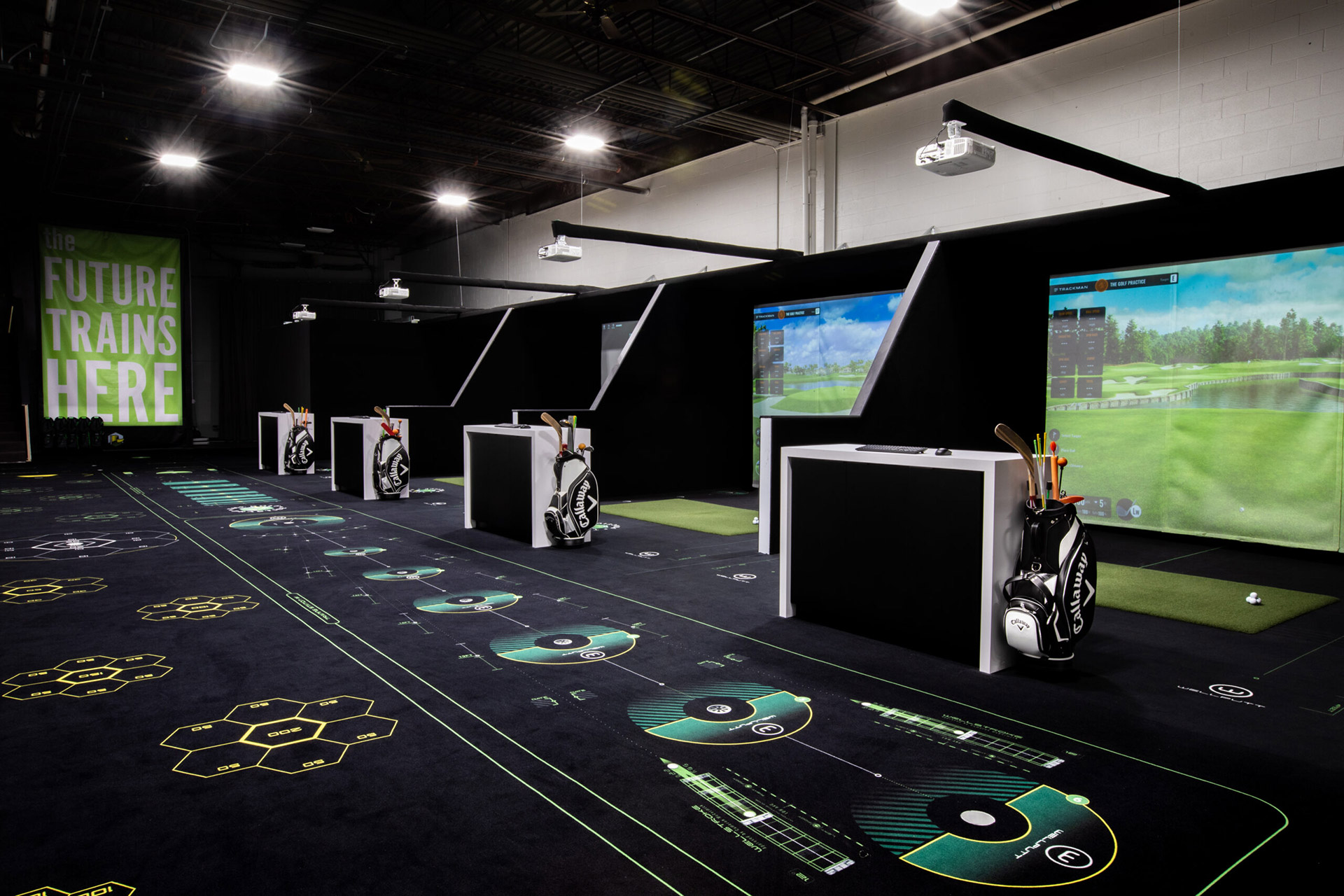
The TrackMan data at The Golf Practice makes this measurable rather than subjective. Coaches look at ball speed variance, face angle consistency, and swing path repeatability across a session. A junior golfer whose numbers cluster tightly — even if the average isn’t impressive — has the consistency to benefit from competitive exposure. A junior whose numbers scatter wildly is telling you they need more development time first.
Sign 2: They Handle Adversity on the Course
Golf is the only sport where the athlete is completely alone with a bad shot and no timeout to reset. A junior golfer who can shake off a double bogey, refocus, and play the next hole without a full meltdown has a critical competitive skill that many adult players never develop. You don’t need to see this in tournament conditions to spot it. Watch how your child responds when they miss a putt during a practice round, or when a chip goes long in a lesson setting.
Emotional recovery is a coachable skill — The Golf Practice’s program includes mental performance coaching alongside swing development — but the raw temperament to compete shows up early. Kids who compete well aren’t necessarily the ones with the lowest scores in practice. They’re the ones who stay in the round.
Sign 3: They’re Self-Motivated to Practice
This one is blunt: if you are the person reminding your child to practice, they are not ready for competitive junior golf yet. That’s not a criticism — motivation develops over time, and early-stage junior golfers often need external structure. But the shift from parent-driven practice to self-driven practice is one of the clearest signals that a junior is mentally ready to compete.
Self-motivation looks like asking to go to the facility on a non-lesson day. It looks like watching tournament footage without being told to. It looks like asking a coach what to work on between sessions, rather than waiting to be told. North Shore families whose kids arrive at The Golf Practice having already identified what they want to work on that day are typically the juniors who are ready to move into competitive programming — or are already there.
Not Sure Where Your Junior Fits?
The Golf Practice coaches can assess your child’s readiness and recommend the right program level — whether that’s the next step in Junior Essentials or a move into High School Prep competition.
Contact Us or call (847) 850-0956.
Sign 4: Their Fundamentals Are Solid Enough to Build On
You don’t need a perfect swing to compete at the junior level. You do need a swing that is fundamentally sound enough that coaching can improve it rather than fight it. Grip, alignment, and ball position are the three fundamentals that matter most at entry-level competition. A junior with a workable grip and reasonable alignment can be coached through almost anything else. A junior with a grip that produces a consistent 30-yard slice is going to struggle in competition regardless of their mental game or motivation.
This is where a diagnostic session at The Golf Practice is genuinely useful before making the decision to enroll in competitive programming. A coach reviews the TrackMan baseline, identifies the one or two fundamentals that need shoring up, and gives you an honest timeline. Some juniors are six weeks from competition-ready. Some need another season in the development track first. Both answers are useful, and both save families from the frustration of pushing into competition before the technical foundation supports it.
Sign 5: They’re Asking for More
The clearest sign is often the simplest one. If your junior golfer is asking to play more golf, asking about tournaments, asking what it takes to make the school team — they’re telling you something. Kids who are ready to compete usually know it before their parents do. They’ve seen older players compete. They’ve watched coverage of junior events. They want to be in that environment.
That pull toward competition is not something you can manufacture. When it shows up, the job shifts from introducing your child to the game to finding the right structure to support the drive they already have. The Golf Practice’s competitive programs across Highland Park and Lisle are built for exactly that — junior golfers in Lake Forest, Deerfield, Evanston, Glencoe, Winnetka, and the broader North Shore who are ready to stop playing for fun and start playing to improve.
What to Do Once You Spot These Signs
If three or more of these signs are present, the next step is a coach evaluation. Bring your junior in for a session at The Golf Practice and let the data and the coaching conversation tell you where they stand. The evaluation covers swing fundamentals, data consistency, and a brief conversation with the junior themselves — because a coach talking directly to the player (not just the parent) often reveals readiness that doesn’t come through secondhand.
From there, the right entry point into the competitive track becomes clear. Some juniors jump into HS Prep 11u and find their footing quickly. Others benefit from one more season in Junior Essentials III before making the move. The goal is not to rush the process — it’s to time it right. A junior who enters competitive programming when they’re genuinely ready develops confidence. One who enters too early often develops the opposite.
Frequently Asked Questions
What age do most junior golfers start competing?
Most junior golfers at The Golf Practice enter their first competitive programming between ages 9 and 11, typically through the HS Prep 11u track. Some juniors are ready earlier — particularly those who started in Junior Essentials Tots and have been building fundamentals since age 3 or 4. There is no universal right age; readiness is skill- and temperament-based, not age-based.
Does my child need a handicap before competing?
Not for entry-level junior competition. Many junior events operate on a gross score format without requiring an official handicap. A GHIN handicap index becomes more relevant as juniors move into stroke play tournaments and college recruiting contexts, but it’s not a prerequisite for getting started. The Golf Practice coaches can advise on when establishing an official handicap makes sense for your junior’s development timeline.
How do I know if the High School Prep program is the right fit?
The HS Prep 11u track is designed for juniors in grades 3 through 5 who have a working swing and some competitive interest. HS Prep 14u covers grades 6 through 8, and 17u covers grades 9 through 12. A coach assessment at enrollment confirms the right level — the grade ranges are guidelines, not hard rules, and a junior who is technically ahead of their grade peers can be placed accordingly.
What if my child tries competition and decides it’s not for them?
That happens, and it’s fine. The Junior Essentials track at The Golf Practice is designed for golfers who want to play and improve without the competitive focus. A junior who tries competition and steps back doesn’t lose their development — they continue in a track that fits where they are. Golf is a lifelong sport. The goal of every program at The Golf Practice is to build a relationship with the game that lasts, competitive or not.
Ready to Get Started?
If your child is showing the signs — bring them in. The Golf Practice coaches at Highland Park and Lisle will tell you exactly where they stand and what comes next.
Contact Us or call us at (847) 850-0956.