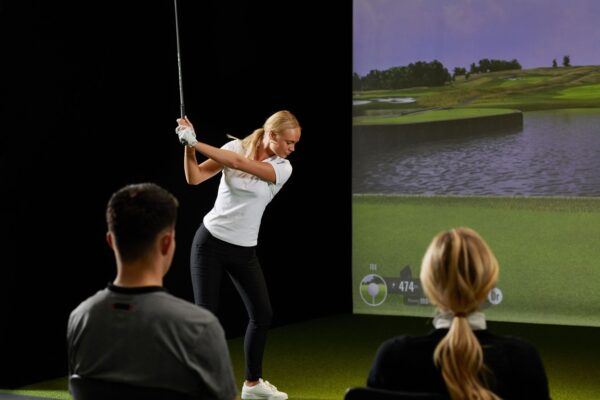
 At The Golf Practice, the indoor golf training academy with locations in Highland Park and Lisle, Illinois, instruction is built on one of the most documented and studied coaching systems in the game: the teaching principles championed by Hank Haney. If you’ve been bouncing between tips and YouTube fixes without lasting results, understanding how this philosophy works — and why it works — is worth your time.
Who Hank Haney Is and Why His Methods Carry Weight
Hank Haney spent over 30 years as one of the most scrutinized golf instructors in the world. His six-year coaching partnership with Tiger Woods, during which Woods won six major championships, placed Haney’s methods under a microscope that few teaching professionals ever face. What emerged from that period wasn’t a collection of tour-specific secrets — it was a validated framework for building a repeatable golf swing grounded in cause and effect.
Haney’s books and instructional materials make his philosophy accessible: the ball flight doesn’t lie, fundamentals outperform feel, and simplicity beats complexity every time. These aren’t abstract ideas. They are the operating principles behind every lesson delivered at The Golf Practice — for junior golfers just starting out and for competitive adults looking to drop strokes before the season opens.
The Core Principles Behind This Approach
Haney’s method starts with ball flight laws. The direction the ball starts tells you where the club face was pointing at impact. The curve tells you the relationship between the club face and the swing path. Once a student understands that relationship, every miss has an explanation — and every explanation has a fix. The Golf Practice coaches use this framework as a diagnostic baseline before prescribing anything.
From there, the focus is fundamentals: grip, alignment, posture, and ball position. Haney has been direct about the damage done by instruction that skips fundamentals to chase feel-based swing changes. When a student’s fundamentals are off, layering more swing thoughts on top creates confusion, not improvement. Fixing the foundation first is less exciting in session one, but it’s what makes the improvement permanent.
The third principle is simplicity. Most golfers walk into a lesson carrying five to ten swing thoughts accumulated from prior tips and videos. Haney’s system works in the opposite direction — identifying the one or two root causes driving a student’s miss and working on those until they’re resolved before adding anything else. The coaching programs at The Golf Practice are structured around this constraint.
How TrackMan Makes This Philosophy Provable
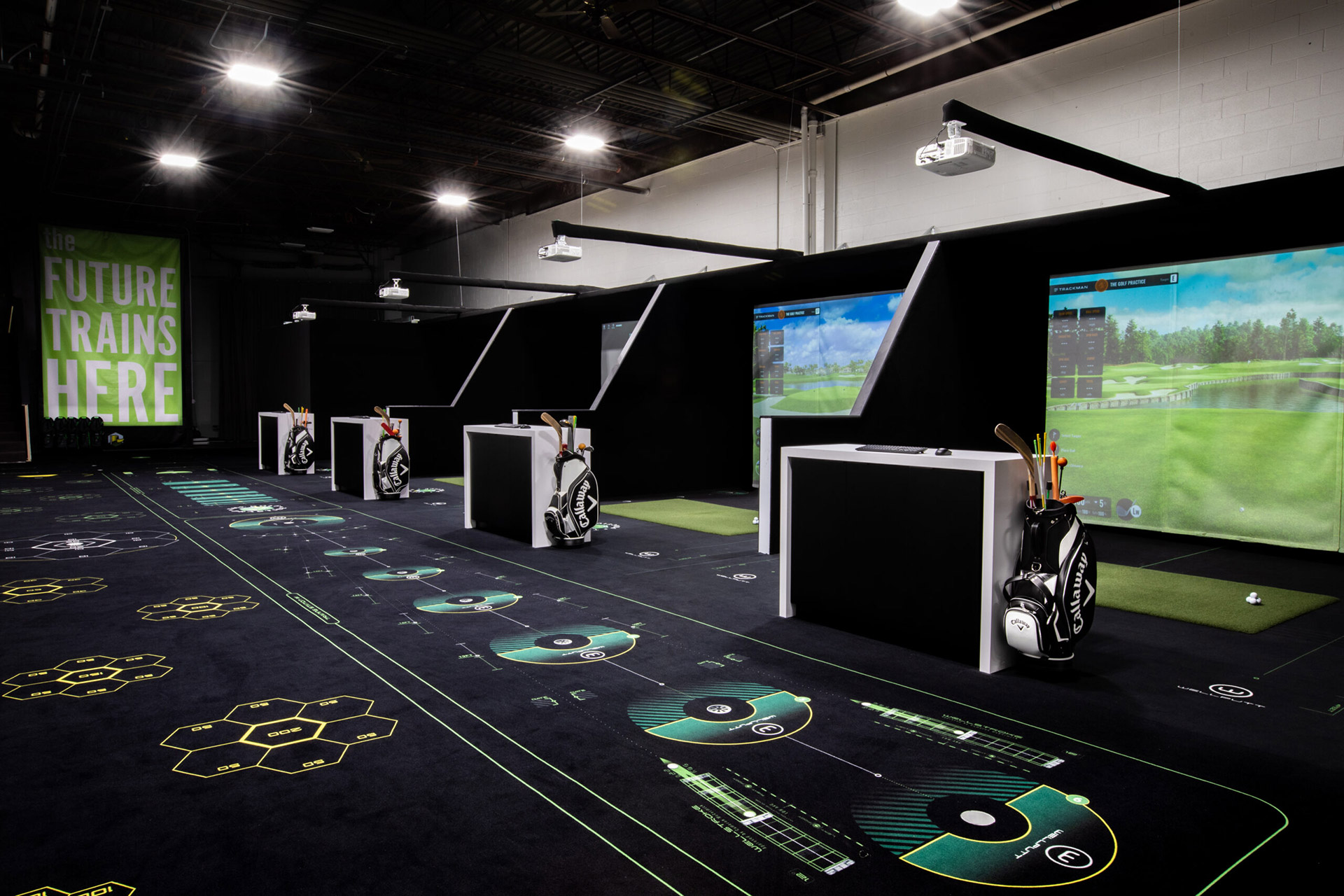
In Haney’s earlier career, ball flight feedback came from watching the shot and reading the result. Today, The Golf Practice runs both locations on TrackMan — the same launch monitor used on the PGA Tour. Seven simulators at Highland Park and eight at Lisle capture every relevant data point at impact: club face angle, swing path, attack angle, spin rate, smash factor, carry distance. Every session.
This means Haney’s core principle — ball flight reveals the truth — is no longer a matter of interpretation. Students see the exact face-to-path relationship that produced their last shot before they swing again. TrackMan’s own published data shows that golfers training with immediate, objective feedback correct swing errors measurably faster than those relying on feel alone. The Golf Practice pairs that data with coaching structure to make the numbers actionable, not just interesting.
See What Your Data Actually Says
A session at The Golf Practice starts with a diagnostic baseline — TrackMan data and video that show exactly what’s happening in your swing. That’s your starting point for real improvement.
Book Your Lesson or call us at (847) 850-0956.
What a Lesson Looks Like at The Golf Practice
The first session is diagnostic. Before a coach prescribes anything, they establish a data baseline using TrackMan and video. Most golfers discover that what they think is happening in their swing differs significantly from what’s actually happening. That gap is where most prior instruction has failed them — coaching based on what a student describes, rather than what the data shows.
From there, sessions build around a focused improvement plan. Adult students typically work on one to two technical fundamentals alongside course management habits — how to practice effectively, how to manage misses on the course. Junior golfers moving through the High School Prep or Mastery 360 programs follow a structured advancement curriculum that integrates swing, mental performance coaching, and competitive preparation. The plan is specific, documented, and tracked session to session.
Who Benefits Most from This Instruction Style
Three types of golfers see the sharpest results from a cause-and-effect coaching model. First: adult players who have taken lessons before without lasting improvement. If past instruction felt disconnected or temporary, the shift to data-backed, root-cause coaching usually explains why. Second: competitive juniors who need their improvement documented — for college recruiting, tournament prep, or simply building confidence through measurable progress. Third: beginners who want to build a sound foundation before habits set in. Correcting a two-year-old grip takes significantly more work than learning the correct grip from the start.
The Golf Practice serves all three groups year-round in Highland Park and Lisle, in a dedicated indoor environment built for focused training. Both locations are open regardless of weather — a practical advantage in Chicagoland that is easy to underestimate until you’ve lost four months of practice time to a brutal winter.
Why Generic Range Instruction Falls Short
A standard range lesson typically means one instructor, one feel-based tip, and ten minutes. There’s no data capture, no session-to-session tracking, and no framework connecting the advice to a coherent improvement system. The advice might be technically sound. But without a documented baseline and a structured follow-up plan, most students revert to their old patterns within a week.
A 2019 study in the International Journal of Sports Science and Coaching found that structured, goal-specific instruction delivered over multiple sessions produced significantly greater skill retention than equivalent practice time without coaching structure. The Haney philosophy — applied through The Golf Practice’s program design — is built around exactly that structure: a documented starting point, a clear objective, and a feedback loop that keeps improving the plan.
The Indoor Advantage for This Type of Training
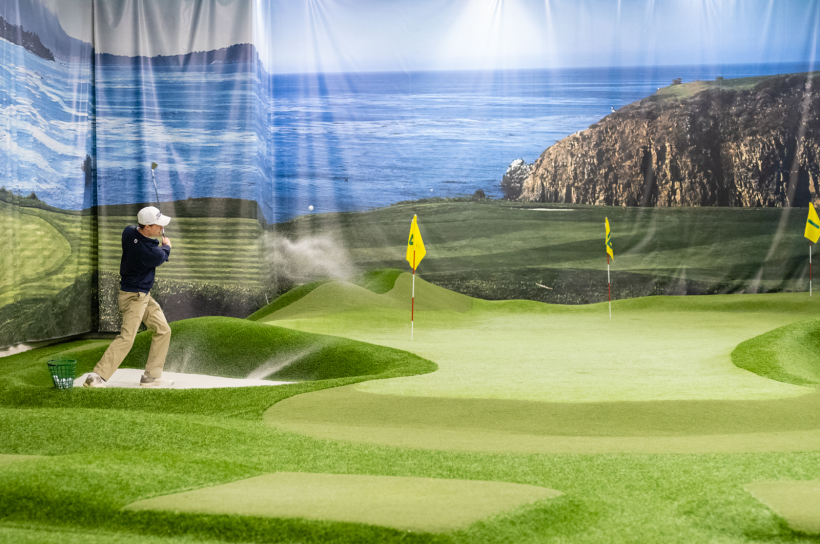
Hank Haney’s approach requires repetition with feedback. You cannot build a repeatable swing in four months of outdoor practice followed by eight months of nothing. The Golf Practice’s Highland Park facility operates year-round with 13,000 square feet and seven TrackMan simulators. Lisle runs 15,000 square feet with eight simulators and a dedicated short game area. Students training through December, January, and February arrive in spring with months of documented progress behind them — not starting over from scratch.
For North Shore families in Lake Forest, Deerfield, Evanston, Winnetka, and Highland Park, this is what year-round access to Hank Haney golf instruction actually looks like: a dedicated indoor academy where your improvement is measured, not guessed at.
Frequently Asked Questions
Do I need to be an advanced golfer to benefit from this type of instruction?
No. Cause-and-effect instruction applies at every skill level. Beginners often benefit most because they’re learning the correct fundamentals before habits set in. The diagnostic process scales to wherever you’re starting — a first lesson looks different from a lesson with a single-digit handicapper, but the underlying framework is the same.
How long does it take to see measurable improvement?
Most students see meaningful TrackMan data changes within three to five sessions. Handicap changes take longer — typically two to three months of consistent practice alongside coaching. Because The Golf Practice tracks data session to session, improvement is visible well before it shows up on a scorecard.
Is this approach used for junior golfers as well?
Yes. Junior programs at The Golf Practice — from Junior Essentials for beginners to Mastery 360 for competitive players — all operate within the same cause-and-effect coaching framework. The curriculum adapts for age and skill level, but the diagnostic rigor and data accountability are consistent across every program.
What is the difference between the Highland Park and Lisle locations?
Both run the same TrackMan-based coaching system. Highland Park is 13,000 square feet with seven TrackMan simulators at 1546 Old Deerfield Rd. Lisle is a newer, 15,000-square-foot facility with eight simulators at 4995 Varsity Drive. The instruction quality is identical — choose whichever location is more convenient.
Ready to Get Started?
Whether you’re an adult looking to finally fix your swing or a parent exploring programs for your junior golfer, The Golf Practice applies Hank Haney’s proven methods with real data at every session.
Book Your Lesson or call us at (847) 850-0956.