


The Direct Link Between Fitness and Distance
Clubhead speed determines how far you hit the golf ball. For every 1 mph increase in speed, you gain approximately 2.5 yards of carry distance. Most recreational golfers swing between 80-95 mph with their driver, while tour professionals average 113 mph.
The gap isn’t just about swing mechanics or natural talent. Physical conditioning plays a major role in generating power. A structured golf fitness program can add 5-10 mph to your swing speed, translating to 12-25 additional yards off the tee.
Golf conditioning targets the physical attributes that limit your current speed. Weak muscles, restricted mobility, poor stability, and inadequate power production all cap your distance potential. Addressing these physical limitations creates measurable improvements in clubhead speed.
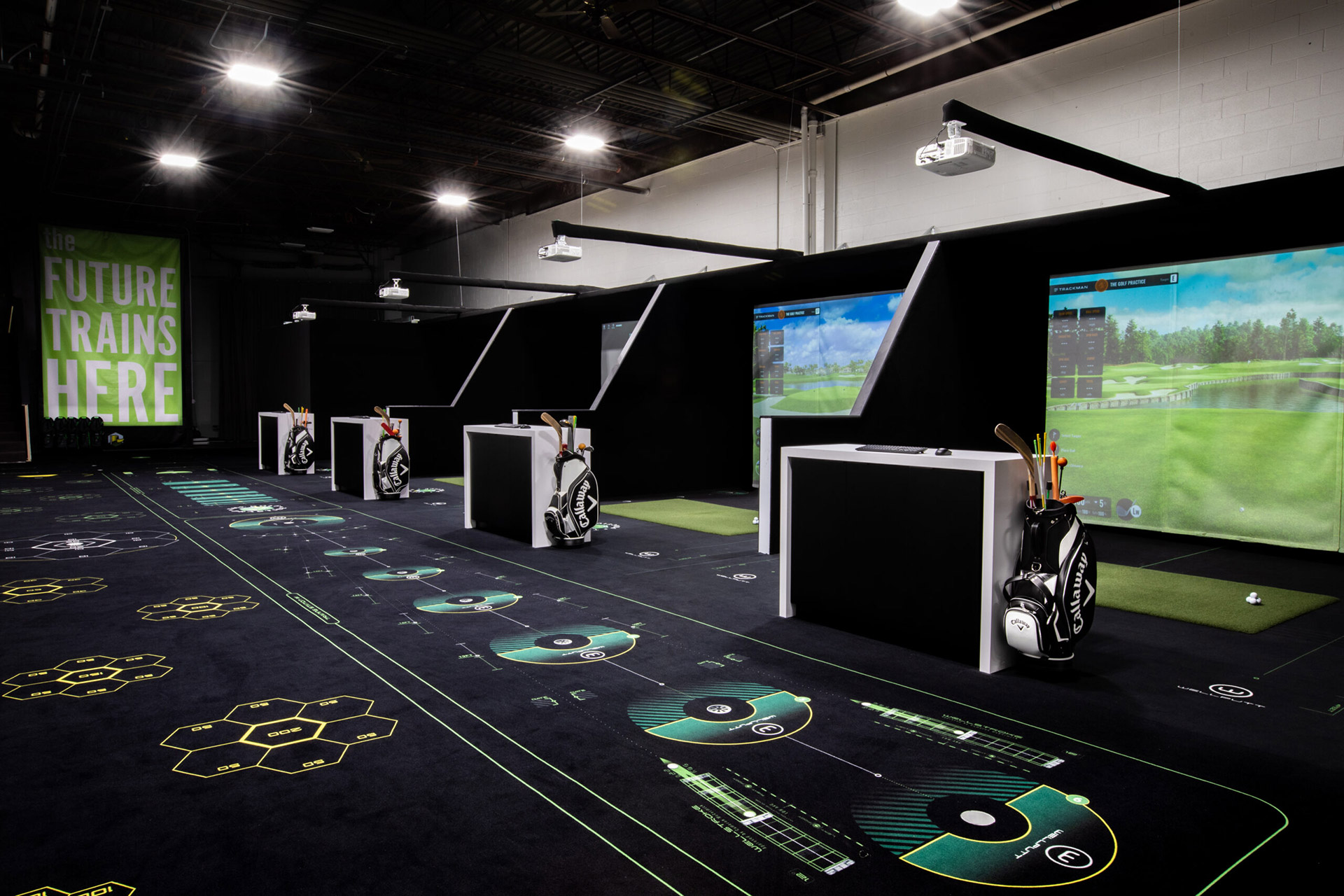
The Golf Practice facilities in Highland Park and Lisle offer conditioning programs designed specifically for golfers looking to increase their swing speed and overall performance. These programs focus on the physical side of golf that practice alone can’t improve.
Why Practice Alone Won’t Maximize Speed
Technical Skills Have Physical Requirements
You can have perfect swing mechanics on paper, but if your body can’t execute those mechanics, your speed remains limited. Many golfers struggle with positions not because they don’t understand them, but because they lack the physical capacity to achieve them.
Restricted hip mobility prevents a full turn. Weak legs limit ground force production. Poor core stability causes early extension. These physical limitations force compensation patterns that reduce clubhead speed.
The Ceiling of Swing Training
Hours on the range improve coordination and timing. But once you’ve optimized your technique within your current physical abilities, you hit a plateau. Further practice maintains your skill level without increasing your speed.
Breaking through this plateau requires improving your physical capabilities. When your body becomes stronger, more mobile, and more explosive, you can generate speed that wasn’t previously accessible through technique alone.
Understanding Clubhead Speed Mechanics
The Kinetic Chain Principle
Golf swing power originates from the ground and transfers upward through your body. Your legs push against the ground, your hips rotate, your torso turns, your arms swing, and finally the clubhead accelerates. This sequence is called the kinetic chain.
Each link in this chain needs adequate strength and mobility. Weakness or restriction at any point limits the total speed you can generate. The energy transfer gets disrupted, and power leaks out of the system before reaching the clubhead.
Force Production and Transfer
Generating force and transferring it efficiently are two different requirements. You might have strong legs, but if your core can’t transfer that force to your upper body, it doesn’t increase clubhead speed. The body must work as an integrated system.
Golf conditioning addresses both force production and transfer. It builds strength where needed while improving the coordination between body segments. This integration allows maximum energy flow from ground to clubhead.
Physical Limitations That Reduce Speed
- Mobility restrictions: Limited range of motion in your hips, thoracic spine, or shoulders prevents a full turn and restricts how much coil you can create. Less coil means less stored energy to release.
- Strength deficits: Weak muscles can’t generate sufficient force or control the club through high-speed movements. Your nervous system slows the swing down to maintain control within your strength capacity.
- Poor stability: Without a stable base, your body compensates by reducing speed. Unstable positions at address or during the swing force your brain to decelerate for safety.
- Lack of explosiveness: Golf happens fast. The downswing takes less than a quarter second. Your muscles need to contract quickly to generate peak force in that short timeframe.
How Conditioning Changes Your Speed Potential
Expanding Physical Capacity
Conditioning programs increase what your body is capable of producing. Stronger muscles generate more force. Better mobility allows fuller rotation. Improved stability lets you swing faster without losing control.
These physical improvements raise your speed ceiling. Positions that were previously inaccessible become achievable. Swing speeds that felt out of control become manageable. Your body can now support what your technique requires.
Neurological Adaptations
Speed training isn’t just about bigger muscles. Your nervous system learns to fire motor units faster and recruit more muscle fibers simultaneously. This neural adaptation happens relatively quickly and produces noticeable speed gains.
The brain also learns to trust that your body can handle higher speeds. When you develop strength and stability, your nervous system removes the protective speed limiters that previously prevented injury.
Differences Between Golf Conditioning and General Fitness
Sport-Specific Movement Patterns
General fitness builds overall health. Golf conditioning builds performance. The movements, force production patterns, and energy systems used in golf differ from other activities. Conditioning programs address these specific demands.
A marathon runner has excellent fitness but may lack the explosive power needed for golf. A powerlifter has tremendous strength but may lack the mobility for a full shoulder turn. Golf conditioning balances all the physical qualities the sport requires.
Addressing Individual Limitations
Every golfer has different physical limiters. Some need more mobility work. Others need strength development. Some require better stability or improved power production. Effective conditioning identifies your specific weaknesses and addresses them.
Generic workout programs don’t account for these individual needs. Golf-specific conditioning starts with assessment to determine what’s limiting your speed, then builds programming around those findings.
Measuring Results and Progress
Baseline Testing
Before starting any conditioning program, establish your current clubhead speed. Launch monitors provide accurate measurements that serve as your baseline. Many golfers are surprised to learn their actual speeds since perceived effort doesn’t always correlate with actual results.
Testing should happen in consistent conditions. Same club, same balls, same environment. This removes variables and ensures you’re measuring actual improvement rather than equipment or environmental changes.
Tracking Physical Improvements
Speed gains correlate with physical improvements. As you get stronger, more mobile, and more explosive, your clubhead speed increases. Many programs include physical testing alongside swing speed testing to show the connection.
Most golfers see noticeable improvements within 6-8 weeks of consistent training. Early gains often come from neurological adaptations and improved mobility. Continued progress requires ongoing strength development and power training.
Get Started With Golf Conditioning
The Golf Practice in Highland Park and Lisle offers golf conditioning programs designed to increase clubhead speed and improve overall performance. Our facilities provide the environment and expertise needed to build physical capabilities that translate to more distance on the course.
Ready to break through your current distance plateau? Contact The Golf Practice to learn more about our conditioning programs and how we can help you increase your clubhead speed.