
Chicago winters end most golfers’ seasons in November and do not give it back until April — unless they train indoors. The Golf Practice keeps players sharp through the cold at its indoor facilities in Highland Park and Lisle, where indoor golf training during a Chicago winter becomes the smartest move a serious golfer can make. Here is why the off-season is an opportunity, not a dead zone, and what winter training actually looks like.
The Winter Gap That Costs Golfers Every Year
Think about what five months off really does. Feel for the clubface fades, distance control slips, and the swing habits you built over summer quietly unravel. Come spring, you are not picking up where you left off — you are rebuilding from a worse starting point than the year before.
Now picture the golfer who trained all winter. They kept their feel, refined their swing, and arrived at the first warm round already ahead of where they finished in the fall. Multiply that across a few seasons and the difference between the two golfers becomes dramatic. The winter gap is where good players quietly separate from the pack.
That is the core case for indoor training. It is not about grinding through the cold for its own sake — it is about refusing to give back the progress you worked all summer to earn.
Why Indoor Is Built for Improvement
Indoor training is not a consolation prize. In several ways it beats the outdoor range for getting better. Climate-controlled bays mean no wind, no cold hands, and no lost balls — just focused, high-quality reps. You get more meaningful swings per hour indoors than you ever could on a frozen range.
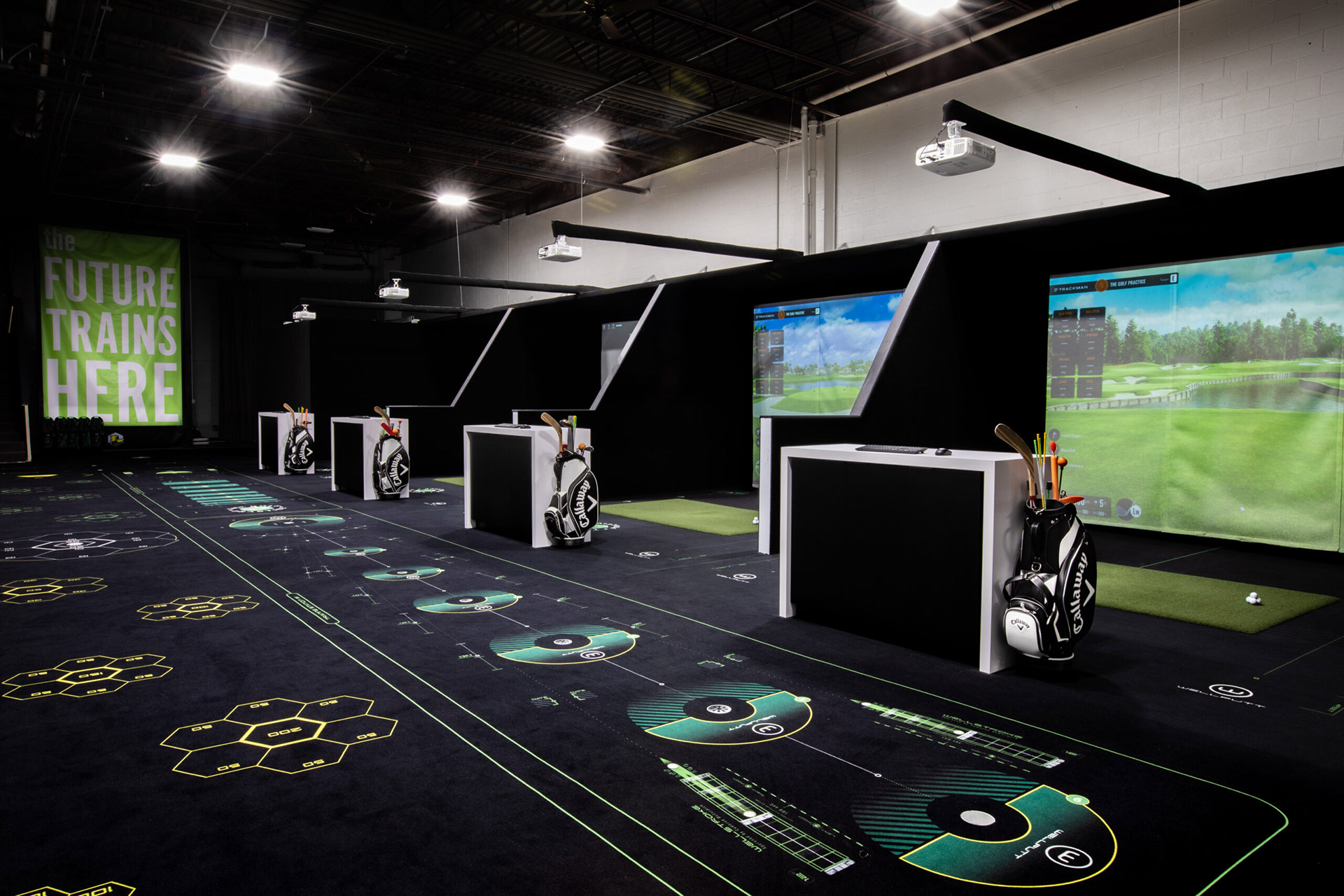
At The Golf Practice, every bay runs on TrackMan, so the work is measured. The indoor practice area lets you reinforce lessons in a controlled space, and the data confirms whether a change is taking hold. The PGA of America describes how launch-monitor feedback lets a coach target the exact fault holding you back.
Winter Is the Time to Rebuild a Swing
You cannot overhaul a swing in the middle of the season — there are rounds to play and scores to protect. Winter removes that pressure entirely. With no competitive golf on the calendar, you can finally make the deeper change that summer never allowed, and repeat it thousands of times until it becomes automatic.
That is why the golfers who make the biggest leaps almost always make them in the off-season. Our guide to lowering your handicap lays out how a focused winter plan turns into a lower scoring average once the season opens.
Start winter training at The Golf Practice and arrive at spring a better golfer than you left fall.
Keep Competing and Playing All Winter
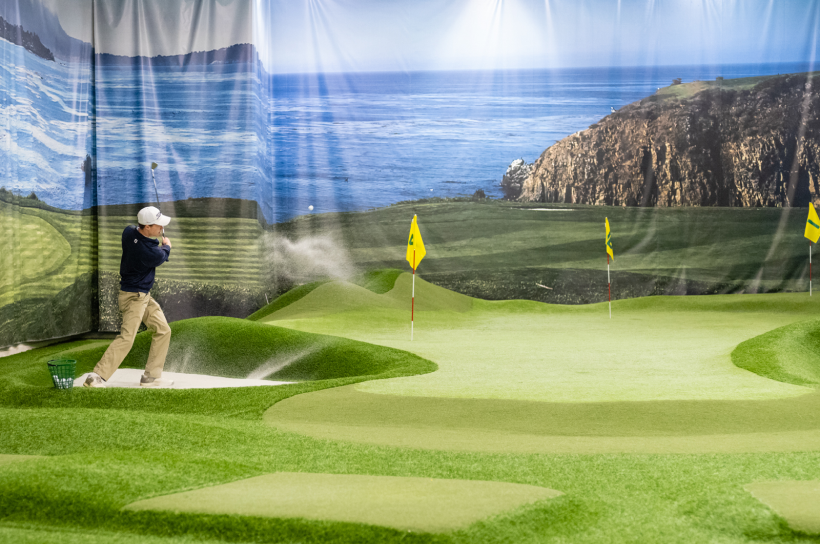
Winter training is not all swing work — it can be genuinely fun. Indoor leagues keep the competitive fire going through the cold months, and simulators let you play famous courses while the snow falls outside. The game does not have to stop just because the weather turned.
The adult league gives players a social, score-focused reason to stay sharp all winter, and our look at perfecting your game in winter shows how competition and practice fit together in the off-season. Staying engaged is half the battle, and a little competition makes the work feel like play.
The Short Game Loves the Off-Season
If you only train one thing this winter, make it the short game. Chipping, pitching, and putting are where amateurs leave the most strokes, and they are perfectly suited to indoor practice where conditions are controlled and repeatable.
Our piece on indoor short game practice shows how winter reps around the greens translate straight into lower scores. A golfer who sharpens their wedges and putter over the winter walks onto the first tee in spring with the most scoreable part of the game already dialed in.
A Winter Routine the Whole Family Can Use
The off-season is not only for adults. Junior golfers who keep developing through winter arrive at spring tryouts and tournaments ahead of teammates who took the cold months off. The junior programs run year round for exactly that reason.
A membership that bundles bay access makes winter training a routine rather than a one-off, so the whole family shows up consistently. Consistency through the cold is what produces a noticeably better golfer by April, whether that golfer is a parent fixing a slice or a junior chasing a roster spot.
Beating the Winter Motivation Slump
The hardest part of winter golf is not the work — it is showing up when it is dark and cold outside. That is exactly why structure helps. A standing lesson, a league night, or a membership routine gives you a reason to keep coming in when motivation dips. Having a clear goal for spring helps too, because every session becomes a step toward it. The golfers who beat the winter slump are not more disciplined; they just built a routine that carries them through it.
Frequently Asked Questions
Is indoor golf training worth it over the winter?
Yes. Training through winter preserves and builds on your progress, so you arrive at spring ahead instead of rusty. The data shows measured gains, not guesswork.
What can I actually do indoors in winter?
Take lessons, practice on TrackMan, sharpen your short game, join an indoor league, and play simulated courses — all in a climate-controlled bay.
Can I keep my game sharp without playing real rounds?
Yes. Measured indoor practice maintains feel and improves technique, and simulators let you play full courses so the competitive side stays sharp too.
Do juniors benefit from winter training?
Absolutely. Juniors who train through winter arrive at spring tryouts and tournaments ahead of peers who stopped for the season.
Ready to Get Started?
Make this Chicago winter the season you get better instead of the season you lose ground.