
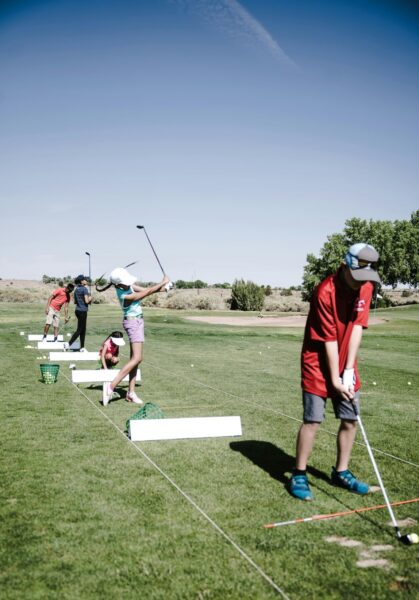
Golf is one of the few sports a person can play from age three to ninety-three. That long runway makes early exposure uniquely powerful. Kids who pick up a club before they hit double digits don’t just learn a sport — they develop coordination, patience, and social skills that stick with them for decades. At The Golf Practice, with indoor training facilities in Highland Park and Lisle, young players across the Chicagoland area are building real swings in a space designed for focused development. Starting early gives kids time to grow into the game naturally, without the pressure that comes from trying to catch up later. The mechanics become second nature. The etiquette becomes habit. And the enjoyment becomes something they carry into adulthood. This article breaks down why age matters, what young golfers actually gain, and how to set kids up for a lifetime on the course.
Why Age Matters in Golf Development
Motor Skill Windows Close Earlier Than Most Parents Think
Children between ages four and eight are in a prime window for developing fine motor skills and hand-eye coordination. Golf demands both. A child who starts swinging during this period builds neural pathways that make the motion feel natural rather than forced.
Waiting until the teenage years means working against habits that have already formed. The body is less adaptable, and the mental approach shifts from play to performance. That transition often kills interest before it ever takes root.
Building Feel Before Building Power
Young kids don’t have the strength to muscle a ball down the fairway, and that’s actually an advantage. They learn tempo, balance, and clubface control first. These are the foundations that separate good golfers from people who just hit hard.
Power comes later, and when it does, it layers on top of solid mechanics instead of replacing them.
The Mental Game Starts Younger Than You Think
Golf is a mental sport disguised as a physical one. Kids who start early learn how to handle frustration in small doses. A missed putt at age six is a three-second disappointment. A missed putt at sixteen can spiral into a lost round.
Young players also develop focus in a way that translates beyond the course. Standing over a ball and blocking out distractions is a skill. Doing it repeatedly over the course of a round builds attention spans that show up in classrooms and conversations.
The ability to reset after a bad shot — to walk to the next tee without carrying baggage — is something adults pay therapists to learn. Kids pick it up organically when the stakes are low.
Physical Benefits That Go Beyond the Swing
Coordination and Balance
Golf requires the entire body to work in sequence. Feet, hips, shoulders, arms, and hands all fire in a specific order. Kids who practice this chain of movement develop proprioception — an awareness of where their body is in space — that benefits them in every other sport they try.
Outdoor Activity Without the Injury Risk
Compared to contact sports, golf carries a low injury risk for young athletes. There’s no tackling, no collisions, and no overuse patterns like those seen in year-round baseball or soccer. Kids stay active without the wear that sidelines so many young athletes by high school.
Social Skills the Course Teaches Naturally
Golf puts kids in situations where they have to interact with adults, follow rules, and manage their behavior — all without a referee standing over them. The honor system built into the game teaches integrity in a way that’s hard to replicate in other sports.
Playing a round also means spending four hours with other people. There’s conversation between shots. There’s encouragement after good ones and support after bad ones. Kids learn how to be good company, which is a skill that pays off long after they stop keeping score.
What Indoor Training Does for Young Players
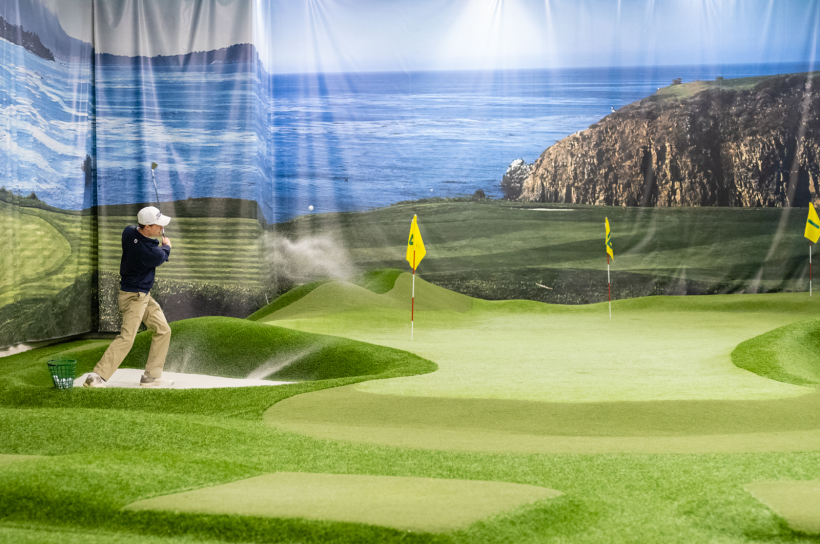
Weather, daylight, and course availability limit how much kids can practice outdoors. Indoor facilities remove all three barriers. A young player can work on their swing in January the same way they would in June.
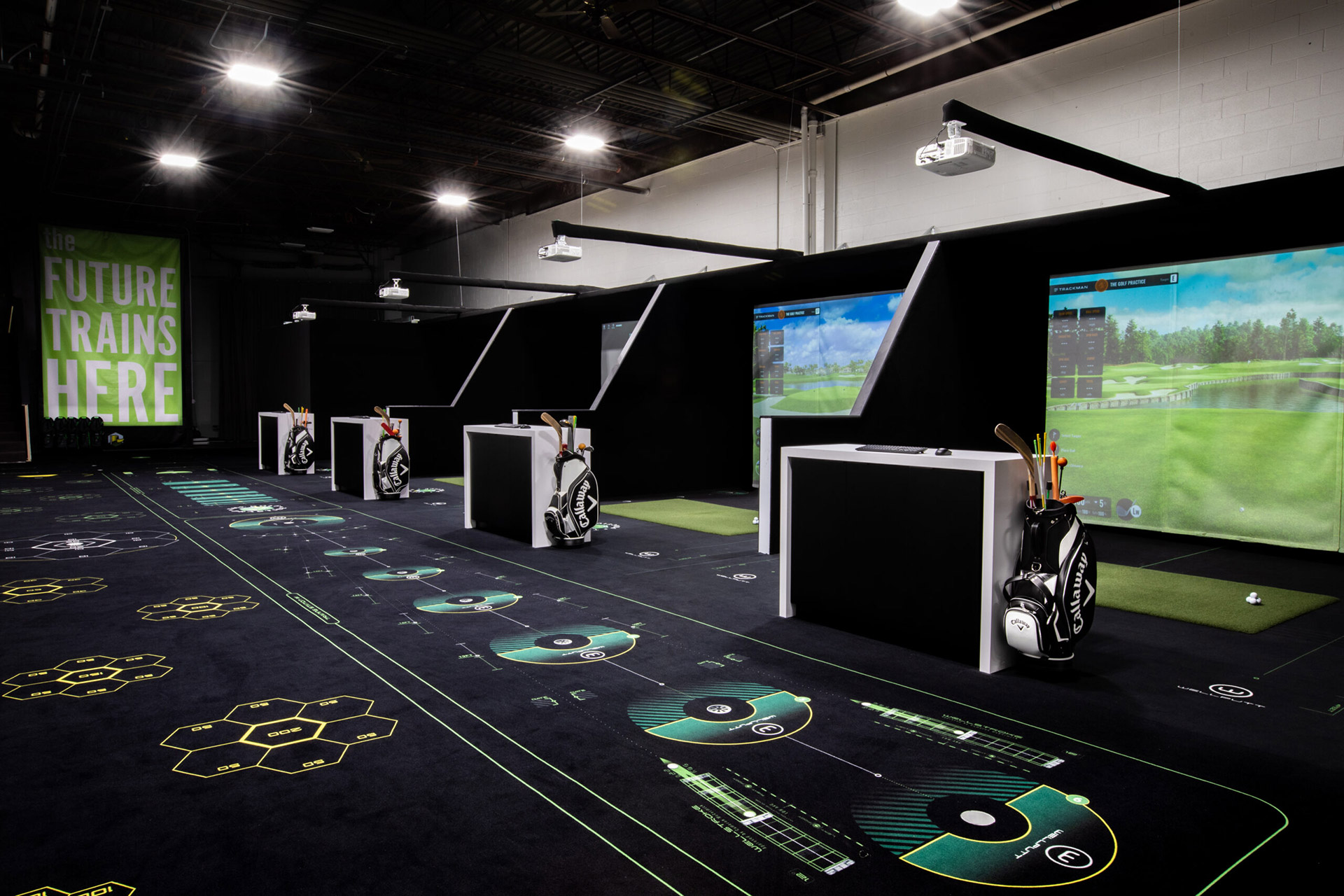
Indoor training also isolates specific skills. Launch monitors and simulators give instant feedback on ball speed, launch angle, and spin rate. Kids don’t have to guess what went wrong — they can see it on a screen and adjust in real time.
The controlled environment keeps sessions focused. There are no lost balls, no slow groups ahead, and no distractions from the task at hand.
Common Mistakes Parents Make When Introducing Golf
- Overloading instruction too early. Kids under seven need play, not a fifteen-point checklist. Let them hit balls and enjoy the sound of solid contact before layering on technique.
- Expecting adult attention spans. A thirty-minute session is plenty for a five-year-old. Pushing past their limit turns practice into punishment.
- Using adult-sized equipment. Clubs that are too long or too heavy force bad mechanics. Fitted junior clubs make a measurable difference in how quickly a kid progresses.
- Tying performance to approval. Praising effort over results keeps kids motivated. The moment golf becomes about meeting a parent’s expectations, the fun disappears.
How to Know If Your Kid Is Ready
Not every child is ready at the same age. But there are a few reliable indicators that a kid can benefit from structured golf time:
- They can follow two-step instructions consistently.
- They show interest in hitting or throwing objects at targets.
- They can stand still for ten to fifteen seconds at a time.
- They enjoy being outside or in active environments.
If a child meets most of those markers, they’re ready to start. The goal at that stage isn’t to build a tournament player. It’s to create positive associations with the game so they want to come back.
Building a Golfer for Life at The Golf Practice
Getting kids started early isn’t about pushing them toward a scholarship or a tour card. It’s about giving them a sport they can enjoy with friends, family, and colleagues for the rest of their lives. The habits formed in childhood — the grip, the tempo, the patience — become the foundation for every round they’ll ever play.
The Golf Practice offers year-round indoor training at two Chicagoland locations in Highland Park and Lisle, giving young golfers a place to develop their game regardless of the season. Book a session for your junior golfer today and give them a head start that lasts a lifetime.
A kid who loves golf at eight will still love it at eighty. That’s the real win.