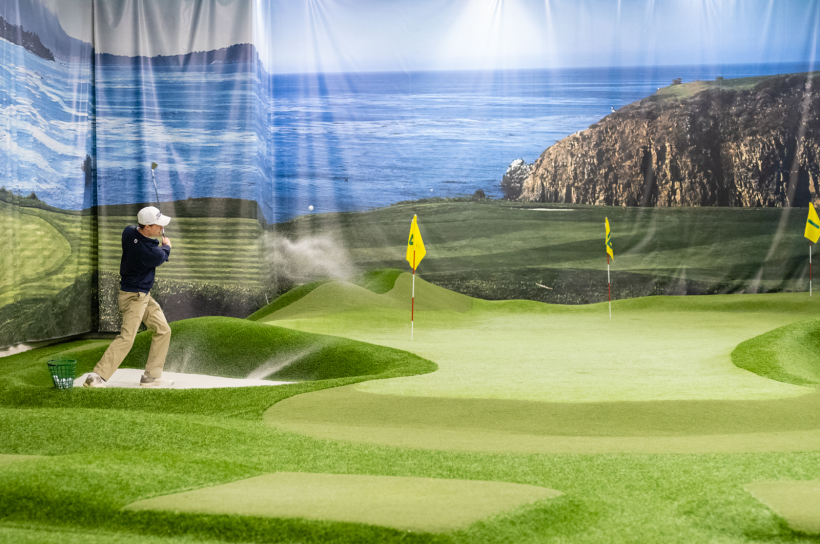


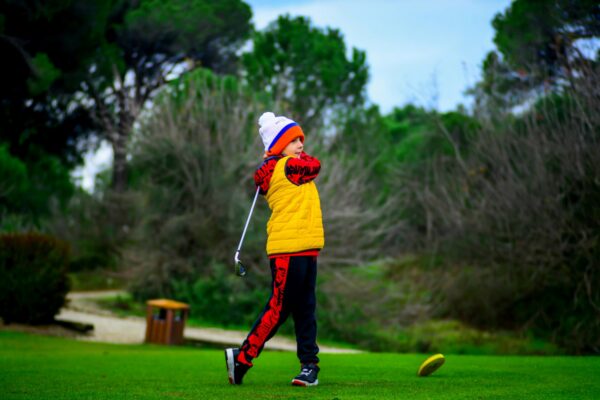
Getting a young golfer into clubs that actually fit them is one of the biggest factors in how quickly they improve, how much they enjoy the game, and whether they stick with it long term. At The Golf Practice, our indoor training facilities in Highland Park and Lisle work with junior golfers across the Chicagoland area every week, and we see the difference properly sized equipment makes in every lesson. Kids swinging clubs that are too long, too heavy, or too stiff develop swing flaws that take years to undo. Kids with gear that matches their height, strength, and swing speed progress faster and have a lot more fun doing it.
Youth golf equipment has come a long way, but parents still frequently hand down adult clubs or buy boxed sets that were built for a different age group. That decision, usually made to save money, often costs more in the long run when the child loses interest or develops habits that require extensive coaching to correct. The right clubs are not a luxury for junior players. They are the foundation everything else gets built on.
How Club Length Changes a Young Golfer’s Swing
Club length is the first fit variable that matters. When a junior grips a club that is too long, their hands end up too far from their body at address, their posture gets thrown off, and their swing plane suffers before they even start the takeaway. Too short, and they hunch over, lose spine angle, and struggle to make consistent contact.
A correctly sized club lets a young player stand in an athletic posture with arms hanging naturally. From there, rotation feels easier, balance stays intact through impact, and the swing becomes repeatable. Repetition builds muscle memory, and muscle memory is what separates kids who plateau from kids who keep getting better.
Measuring for the Right Length
Most junior fittings start with height, but wrist-to-floor measurement gives a more accurate reading. Two kids who are the same height can have very different arm lengths, and the club length should follow the arms, not just the overall stature. A proper fitting takes five minutes and saves months of bad habits.
Weight and Flex Matter Just as Much
Length gets most of the attention, but shaft weight and flex deserve equal consideration. A shaft that is too heavy forces a young player to muscle the club through impact, which kills tempo and produces off-center strikes. A shaft that is too stiff prevents them from loading the club properly on the backswing, so they never feel what a real swing is supposed to feel like.
Junior-specific shafts are lighter and more flexible for a reason. They let smaller bodies generate speed naturally instead of fighting the equipment. When a young golfer can swing freely, they learn rhythm, they learn release, and they start seeing ball flight that actually resembles what their instructor has been describing.
Grip Size Is Often Overlooked
Grip size rarely comes up in conversations about junior equipment, but it should. A grip that is too thick locks up the wrists and prevents the natural hinging motion that adds distance and control. Too thin, and the hands get too active, which produces wild misses in both directions.
Junior grips are sized specifically for smaller hands. Re-gripping a set is inexpensive and can transform how a young player feels the club. If your child’s hands do not wrap around the grip with the fingertips just touching the pad of the thumb, the grip needs changing.
Signs That Your Junior’s Clubs No Longer Fit
Kids grow fast, and clubs that fit perfectly in spring may not fit by fall. Paying attention to a few indicators can tell you when it is time for a refit.
- The child is consistently hitting the ball off the toe or heel rather than the center of the face.
- Posture at address looks cramped, stretched, or otherwise unnatural compared to a few months earlier.
- Swing speed has clearly increased but ball flight has gotten worse instead of better.
- The child is reaching for longer clubs less often because they feel too heavy or unwieldy.
- Complaints about wrist, back, or shoulder soreness after practice sessions.
Any one of these signals is worth investigating. Two or more means a refit is overdue.
The Confidence Factor
Equipment that fits does something beyond mechanics. It builds confidence. A young player who can make solid contact, see the ball go where they aimed, and feel in control of the club starts believing they belong on the course. That belief drives practice, and practice drives improvement.
Ill-fitting clubs do the opposite. Every bad shot reinforces the idea that golf is too hard. Kids quit games they think they are bad at, and far too many promising juniors walk away from golf because nobody told their parents the equipment was the problem.
How Indoor Training Changes the Fitting Equation
Chicagoland winters used to mean five or six months of no golf for junior players, which made fitting a once-a-year event tied to the start of the outdoor season. Indoor facilities changed that completely. Launch monitors, hitting bays, and year-round access mean juniors can be fitted, refitted, and coached in any weather.
At The Golf Practice, our Highland Park and Lisle locations give junior players data on every swing. Clubhead speed, ball speed, launch angle, and spin rate are all measured in real time, which means fitting decisions are based on what the child is actually doing, not what a size chart predicts. Come see us at The Golf Practice for a junior club fitting and find out what the right clubs can do for your young golfer.
What to Avoid When Buying Junior Clubs
Boxed sets marketed to kids are the most common trap. They are built to a price, not to a player, and the shafts, weights, and grips are rarely matched to any specific size range. Hand-me-downs from an older sibling or parent are the second trap. Adult clubs cut down to junior length keep the adult swing weight and shaft stiffness, which defeats the purpose of shortening them.
Better Options for Growing Players
Look for junior-specific brands that build clubs from the ground up for smaller players. Several manufacturers now produce lines organized by height range rather than age, which is far more useful. Used junior clubs from a reputable fitter are also a good route, because fitters know what actually fits and can match a used set to your child with the same care as a new one.
Building a Long-Term Plan for Your Young Golfer
The best approach treats equipment as something that evolves alongside the player. A four-year plan that includes two or three refits, regular lessons, and year-round practice will produce a stronger golfer at lower total cost than buying a full new set every time growth forces the issue. Good fitters and coaches can help you stage purchases so you are not replacing everything at once.
Junior golfers who learn the game with properly fitted clubs carry that foundation into their teenage years and beyond. They develop swings that hold up under pressure, habits that transfer to adult equipment smoothly, and a love for the game that survives the awkward growth-spurt years. The investment in fit pays back every round for the rest of their golfing life.