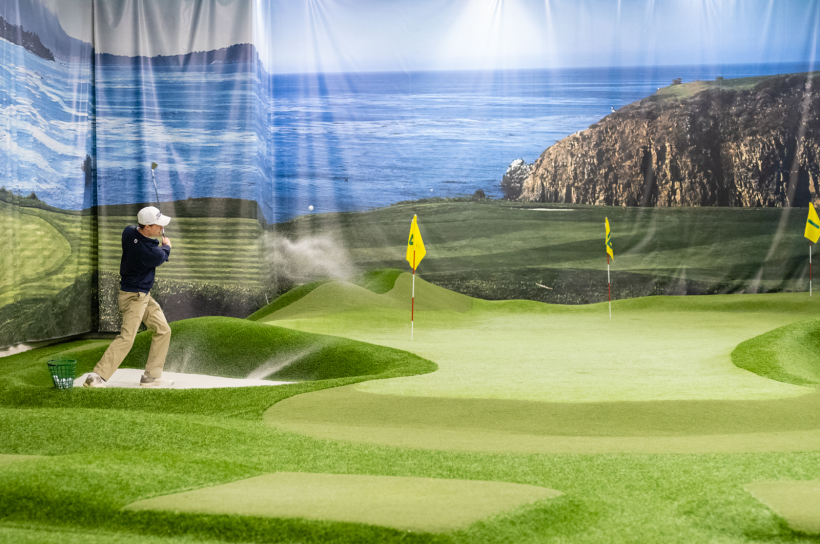
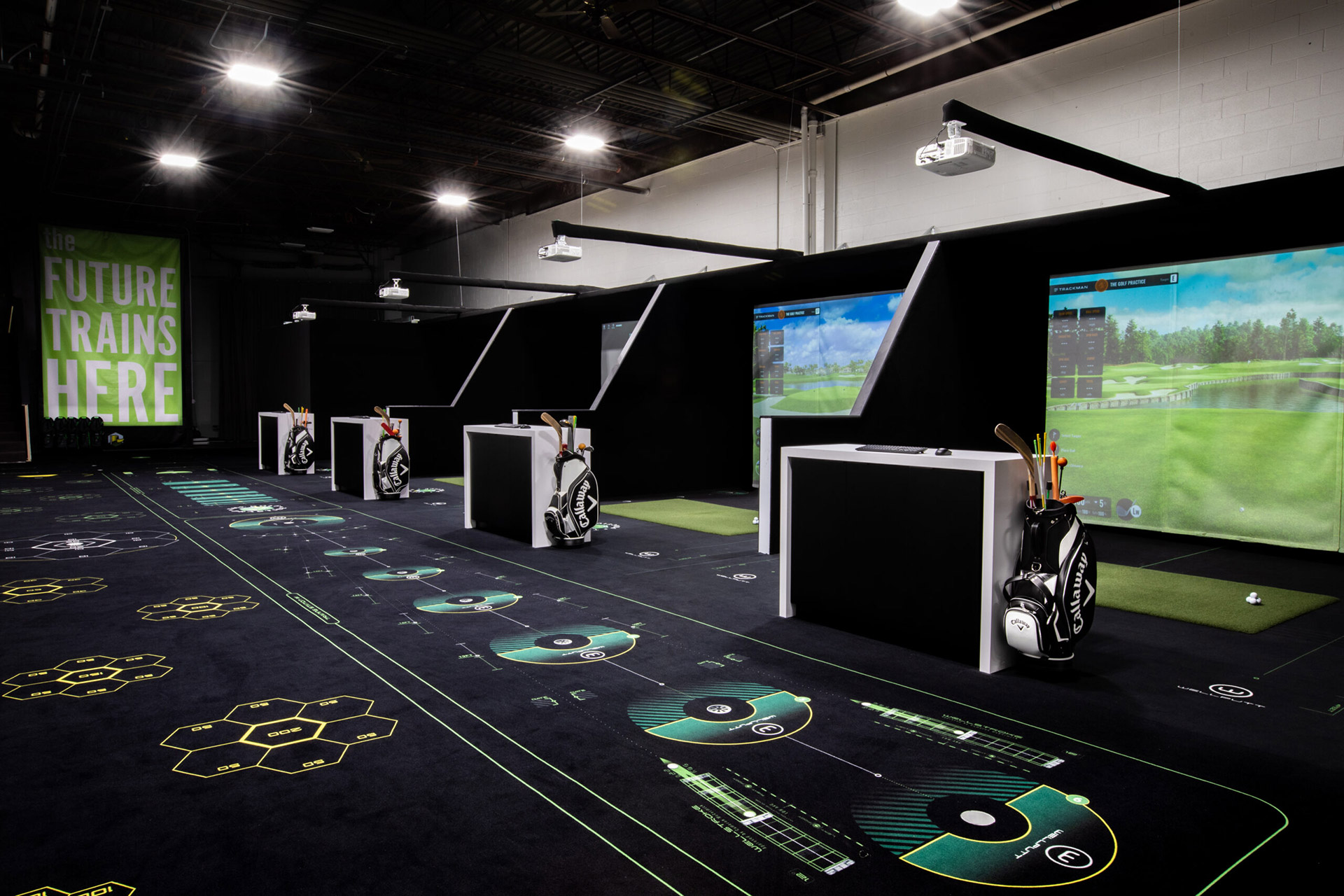

Most Chicagoland golfers put their clubs away when the leaves turn, and that is exactly why fall is the best time to start. The Golf Practice runs indoor golf training in Chicago year round at its Highland Park and Lisle facilities, where the off-season becomes the period that separates golfers who improve from golfers who simply maintain. As outdoor play winds down, here is why the smart move is to start training indoors now — not next April.
The Off-Season Is When Real Improvement Happens
Summer is for playing, not rebuilding. When you are squeezing in weekend rounds, there is no time to tear down a flawed swing and put it back together. Fall removes that pressure. With the competitive and casual seasons over, you can finally work on the change that actually lowers your scores.
That is the counterintuitive truth about getting better at golf. The biggest gains rarely come during the season; they come in the quiet months when you can practice a new pattern thousands of times without a scorecard hanging over you. Indoor bays make those months productive instead of lost.
Start in fall and you give a swing change the runway it needs to become automatic by spring. Wait until April and you are trying to rebuild and play at the same time, which is how good intentions fall apart by Memorial Day.
Why Chicago Weather Makes This Non-Negotiable
Outdoor golf in Illinois effectively closes from late fall through early spring. For roughly half the year, the only way to keep developing is indoors. Golfers who accept that and train through the cold arrive at the new season improved, while everyone else starts over rusty.
The math is simple and a little brutal. A golfer who takes five months off loses feel, distance control, and the habits they built the prior summer. A golfer who trains those same five months indoors compounds their progress. Over a few years, that gap becomes enormous.
What Indoor Training Actually Looks Like
Indoor golf training is not a downgrade — in many ways it is better for improvement. Climate-controlled bays, instant feedback, and no lost balls mean every minute is focused work. You hit more quality reps per hour indoors than you ever could chasing shots on a cold range.
At The Golf Practice, that work runs on TrackMan, so you are not guessing. The indoor practice bays let you reinforce lessons in a controlled space, and the data shows exactly whether a change is taking hold. Our look at lessons versus simulators explains how guided indoor work beats unstructured screen time.
Train With Data, Not Hope
The advantage of indoor training is measurement. TrackMan captures your carry distances, club path, and dispersion on every swing, so you practice your real weaknesses instead of the parts you already enjoy. The PGA of America describes how that launch-monitor feedback lets a coach target the exact fault holding you back.
Measurement also keeps you honest about progress. The USGA World Handicap System builds your index from the best 8 of your last 20 scores, so the work you put in this winter shows up as a lower number next summer. You can see how that data drives a full plan in our 90-day handicap guide.
Start indoor training this fall and walk onto the first tee in spring already better.
Build a Routine That Survives Winter
The golfers who improve over the off-season are the ones who make training a habit, not a one-off. A membership that bundles bay access turns winter practice into a routine, so you show up weekly instead of whenever motivation strikes. Consistency, not intensity, is what produces a different golfer by April.
Pairing that routine with lessons multiplies the effect. Practice without direction grooves whatever you already do, good or bad. A coach gives you the right thing to repeat, and the indoor bays give you the reps to make it stick.
The Whole Family Can Use the Off-Season
Fall training is not only for adults. Junior golfers who keep developing through winter arrive at the spring season ahead of teammates, which matters for tryouts and competitive play. The junior programs run year round for exactly that reason.
For families across the North Shore and western suburbs, the off-season is a shared opportunity — a parent fixing a slice in one bay while a junior sharpens a short game in the next. Both arrive at spring better than they left fall.
The Cost of Waiting Until Spring
Putting off training until the weather warms feels harmless, but it carries a real price. You spend the first month of the season knocking off rust instead of improving, while the golfers who trained all winter are already building on a better baseline. By the time you feel sharp again, they have pulled further ahead. Starting in fall flips that script — you arrive in spring ready to play your best golf, not ready to begin practicing it.
Frequently Asked Questions
Is indoor golf training as effective as outdoor practice?
For improvement, often more so. Climate control, instant TrackMan feedback, and focused reps mean more quality work per hour than a cold outdoor range.
When should I start to be ready for spring?
Fall. Starting now gives a swing change months to become automatic before the season, instead of cramming a rebuild into April.
Do I need a membership, or can I take single lessons?
Both work. Single lessons fix specific faults; a membership that bundles practice time builds the consistent routine that drives off-season gains.
Can juniors train indoors over the winter?
Yes. Junior programs run year round, and players who keep developing through winter arrive at the spring season ahead of their peers.
Ready to Get Started?
Turn the Chicago off-season into your advantage and arrive at spring as a measurably better golfer.